EcoNexus is a not-for-profit public interest research organisation analysing developments in science and technology and their impacts on environment and society. Read more

Highlighted

January 2013 - Commentary - Agrofuels (biofuels), Food Security, Food Sovereignity & Sustainable Farming

Comments from Biofuelwatch, EcoNexus and Global Forest Coalition

Biofuelwatch, EcoNexus & Global Forest Coalition

The 2011 Report on Price volatility and food security by the HLPE on Food Security and Nutrition provided well-researched and high-quality evidence about the role of biofuels in recent food price rises and price volatility.
We had therefore anticipated that the draft report “Biofuels and Food Security” by the HLPE on Food Security and Nutrition would build on and further develop the evidence collated for the 2011 report. Instead, we have been deeply disappointed by the low quality of evidence and inaccuracies contained within this draft report. While some paragraphs and statements are based on convincing evidence, so many are not that we believe the report needs to be sent back to be substantially re-written before being put out to public consultation again. Below are examples of some of the serious flaws we have found in the report followed by key concerns about the draft recommendations.

December 2002 - Briefing - Genetic Engineering

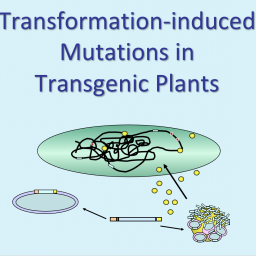
Government and Corporate Scientific Incompetence: Failure to assess the safety of GM crops

by Ricarda A. Steinbrecher

The CaMV 35S promoter is being used in almost all GM crops currently grown or tested, especially GM maize. It is the promoter of choice for plant genetic engineering, as it is a strong and constitutive promoter. Failure to recognise or to take into account its capacity to be universally active in almost any organism is irresponsible and careless and shows a serious lack of scientific rigour and commitment to safety.
Any safety assessment can be expected to be flawed that does not resort to actual laboratory test of the capacity of bacteria and fungi to utilise the particular genes and their promoters.

December 2012 - Report
Helena Paul and Ricarda Steinbrecher

This brief report takes an initial look at how governments, international finance institutions and global corporations are collaborating in major new projects (currently in Mozambique and Tanzania) to reorder land and water use and create industrial infrastructure over millions of hectares in Africa in order to ensure sustained supplies of commodities and profits for markets. The corridors are described as development opportunities, especially for small farmers, but are likely to be most advantageous to corporations and client governments, with the help of international institutions including the World Economic Forum, the G8 and G20 groups of the major global economies, the Food and Agriculture Organisation and the World Bank.

The report is divided into three parts, 1) an introduction to the concept and who is behind it, 2) the corridors themselves, and 3) their potential impacts.

June 2012 - Opinion piece - Rio+20 - Corporations

A response to the proposal for a Convention on Corporate Sustainability Reporting

Helena Paul

In the face of the multiple crises of biodiversity loss, ecosystem degradation and climate change plus economic turbulence and injustice, it is strange that there is so little discussion about controlling corporate power and exploitation in the run-up to Rio+20. There are proposals for increasing the participation of women, youth and communities in decision-making. There are calls to reduce land degradation and deforestation, promote sustainable production and consumption, increase energy and resource-use efficiency, and protect ecosystems. But there is almost nothing about tackling the corporations that are doing so much of the damage. There is also no visible discussion about the advertising and public relations activities that corporations use to promote consumption and drive forward the wasteful consumerist development model that generates corporate profits but that also threatens the wellbeing and even survival of present and future generations.

August 2011 - Submission - GE wheat

Submission on Rothamsted Research application for consent to release genetically modified wheat in the UK

Dr. Ricarda A. Steinbrecher

In Conclusion: I have wanted to highlight and list a few points that elucidate the shortcomings of the data provided and the risk assessment carried out and provided. These, in my view, give evidence to the necessity to do further indoor trials, reassess the hypothesis and test for health consequences before any open environmental release should or could take place. It should further be deliberated whether the approach taken to address the aphid problem does not in itself cause new problems.

April 2012 - Briefing - SBSTTA 16 - (Green) Economy, Agrofuels (biofuels)

Biofuels, Bioenergy, Biochar and the Technologies of the new Bioeconomy

CBD Alliance

Industrial scale bioenergies, including biofuels are rapidly expanding, creating massive new demand for wood, vegetable oil and agricultural products. Already these demands are inflicting serious and irreversible impacts on forests and other natural ecosystems, soils and water resources. Expansion of industrial monocultures, including tree plantations, to meet this demand occurs at the expense of biodiversity and food production, while also contributing to “land grabs”, undermining the rights of peasant farmers and indigenous peoples, and hampering efforts to achieve food sovereignty and agrarian reform.
The CBD Secretariat's report rightly acknowledges many of these negative impacts. However, in line with COP10 decision X/37, it focuses predominantly on 'tools', i.e. standards and certification, to address the often complex direct and indirect negative impacts, without assessing whether those tools are credible instruments.
Standards and certification schemes per se have not been effective and are no match for countering the drivers of bioenergy expansion: targets, mandates and subsidies, especially in Europe and North America. To effectively address the negative impacts, those incentives need to be eliminated.

October 2011 - Submission - SBSTTA 16 - Synthetic biology
The International Civil Society Working Group on Synthetic BiologyConsisting of: Action Group On Erosion, Technology and Concentration (ETC Group), Center for Food Safety Center for Food Safety, Econexus, Friends of the Earth USA, International Center for Technology Assessment, and The Sustainability Council of New Zealand

The new and emerging issue of synthetic biology is relevant to the attainment of the objectives of the CBD, its thematic programmes of work and cross-cutting issues.
We recommend that SBSTTA, in the development of options and advice on the new and emerging issue of synthetic biology for the consideration of COP11, consider the following actions/recommendations under the Convention on Biological Diversity, the Cartagena Protocol on Biosafety, the Nagoya-Kuala Lumpur Supplementary Protocol on Liability and Redress, and the Nagoya Protocol on Access and Benefit Sharing.